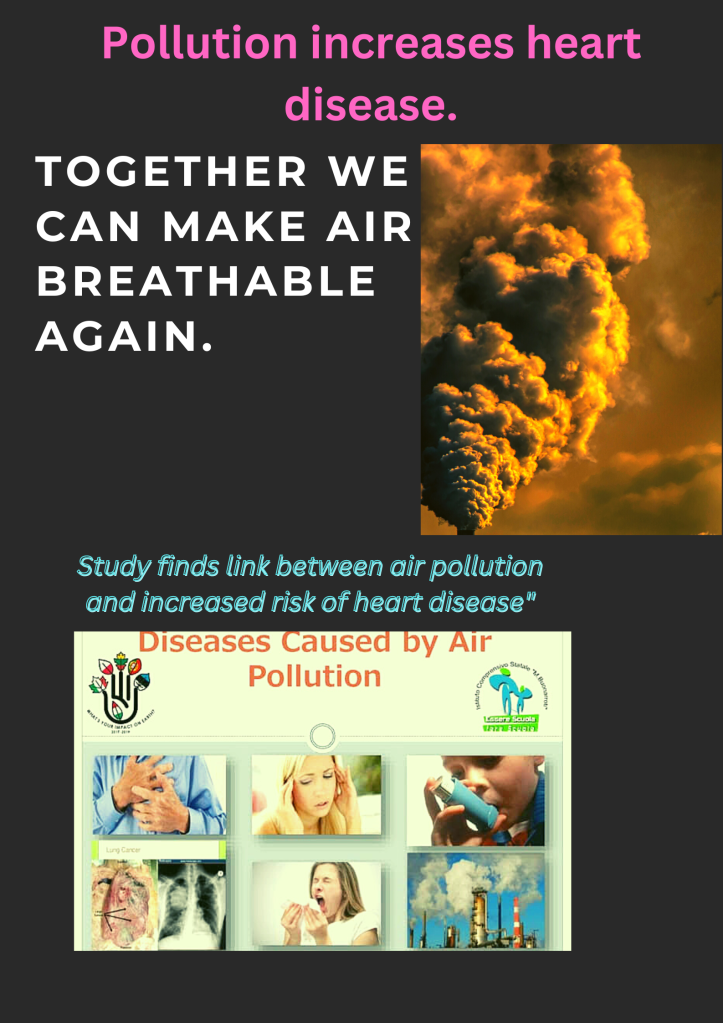
Study finds link between air pollution and increased risk of heart disease”
Air pollution has long been known to have negative effects on our respiratory health, but a new study has found that it may also be linked to an increased risk of heart disease.
The study, published in the journal Circulation, analyzed data from over 157,000 participants in the UK Biobank, a large-scale study that aims to improve the prevention, diagnosis, and treatment of a wide range of illnesses.
The researchers found that exposure to higher levels of fine particulate matter (PM2.5) and nitrogen dioxide (NO2) was associated with an increased risk of heart disease, even after accounting for other risk factors such as smoking, high blood pressure, and diabetes.
Specifically, for every increase of 5 micrograms per cubic meter of PM2.5, there was a 10% increase in the risk of heart disease. Similarly, for every increase of 10 micrograms per cubic meter of NO2, there was a 6% increase in the risk of heart disease.
The study’s lead author, Dr. Nay Aung from Queen Mary University of London, noted that the findings have important implications for public health policy.
“Our findings suggest that policies aimed at reducing air pollution levels to comply with WHO guideline levels might be expected to have long-term cardiovascular health benefits,” said Dr. Aung.
The World Health Organization recommends that the annual average concentration of PM2.5 should not exceed 10 micrograms per cubic meter and that the annual average concentration of NO2 should not exceed 40 micrograms per cubic meter.
However, many cities around the world still have air pollution levels that exceed these guidelines, highlighting the need for continued efforts to reduce air pollution and protect public health.
The study’s findings are particularly concerning given the widespread nature of air pollution. In 2019, the State of Global Air report estimated that air pollution was responsible for over 4.2 million premature deaths worldwide, making it the fifth leading risk factor for mortality.
While some countries have taken steps to address air pollution, including implementing regulations on vehicle emissions and transitioning to cleaner energy sources, progress has been slow in many parts of the world. In fact, air pollution levels have continued to worsen in some regions, such as South Asia and Sub-Saharan Africa.
In addition to its impact on heart health, air pollution has been linked to a range of other negative health outcomes, including respiratory illnesses, cognitive decline, and even certain types of cancer.
Children and elderly individuals are particularly vulnerable to the effects of air pollution, and exposure during pregnancy has also been linked to adverse birth outcomes such as low birth weight and preterm birth.
Given these serious health risks, it is important that policymakers take action to reduce air pollution levels and protect public health. This could include implementing stricter regulations on industrial emissions, promoting the use of public transportation and clean energy, and investing in green infrastructure such as parks and bike lanes.
Individuals can also take steps to reduce their exposure to air pollution, such as avoiding outdoor exercise during times of high pollution and using air filters in their homes.
Ultimately, addressing air pollution will require a coordinated effort from governments, industry leaders, and individuals around the world. However, the potential health benefits of reducing air pollution levels are significant, making it a crucial issue for public health and wellbeing.
Furthermore, the economic cost of air pollution is also significant. A report by the Lancet Commission on Pollution and Health estimated that the cost of air pollution-related illness and premature deaths was $5.1 trillion in 2019, equivalent to 7.1% of global GDP.
Reducing air pollution could, therefore, have significant economic benefits, as healthier populations are more productive and less burdened by healthcare costs. This could be especially important for low- and middle-income countries, where the burden of air pollution is often highest and economic growth is needed to improve the lives of citizens.
While reducing air pollution is a complex and multifaceted issue, it is clear that it should be a priority for policymakers and individuals alike. The findings of this study linking air pollution to an increased risk of heart disease add to the mounting evidence of the negative health impacts of air pollution, underscoring the need for action to protect public health and the environment.
In addition to government action, businesses and individuals can also play a role in reducing air pollution. For example, companies can adopt sustainable business practices and invest in clean energy, while individuals can choose to use public transportation or switch to electric vehicles.
There is also a need for further research to better understand the mechanisms behind the link between air pollution and heart disease. While the study suggests that the negative effects of air pollution on heart health may be related to inflammation and oxidative stress, more research is needed to confirm these findings and explore potential interventions.
In addition, it is important to note that the health effects of air pollution are not distributed equally across populations. Low-income communities and communities of color often bear a disproportionate burden of air pollution, as they are more likely to live in areas with high levels of pollution and may also have higher rates of pre-existing health conditions that make them more vulnerable to the negative effects of air pollution.
Efforts to reduce air pollution must therefore be accompanied by a commitment to environmental justice, ensuring that all communities have access to clean air and the resources necessary to protect their health and wellbeing.
In conclusion, the study linking air pollution to an increased risk of heart disease highlights the urgent need for action to reduce air pollution levels and protect public health. With coordinated efforts from governments, industry leaders, and individuals, it is possible to reduce air pollution and create a healthier, more sustainable future for all.
- WARNING: Exposure to pollution increases the risk of heart disease.
- CAUTION: Prolonged exposure to pollution can have a negative impact on heart health.
- NOTICE: Scientific studies have shown a link between pollution and an increased risk of heart disease.
- ALERT: Protect your heart by minimizing exposure to pollution.
- DANGER: Pollution is a major contributor to heart disease. Take steps to reduce your exposure today.
- IMPORTANT: Pollution can harm your heart. Consult with your doctor if you have concerns about your heart health.
- BEWARE: Prolonged exposure to pollution can lead to serious heart problems. Protect your heart by taking necessary precautions.
- ADVISORY: Individuals with pre-existing heart conditions are particularly vulnerable to the negative effects of pollution. Take extra precautions to protect your heart.
 Vitality Hub